Percolation · higher-order networks
Percolation on Simplicial Complexes
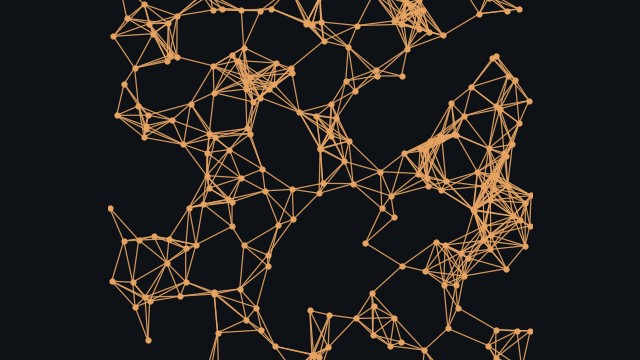
The notebook · live in your browser, code and all
open full screen ↗Ordinary percolation lives on a graph: add links until a giant connected cluster appears. I pushed it up a dimension, onto simplicial complexes where the pieces are triangles and tetrahedra, not just edges. The higher-order versions do not ease into their transition the way ordinary networks do; they snap, much closer to discontinuous. I track the giant component and the susceptibility across the occupation probability and use finite-size scaling to pin down where the jump sits.