Pattern formation · PDE numerics
Gray-Scott Reaction-Diffusion — Turing Patterns
The notebook · live in your browser, code and all
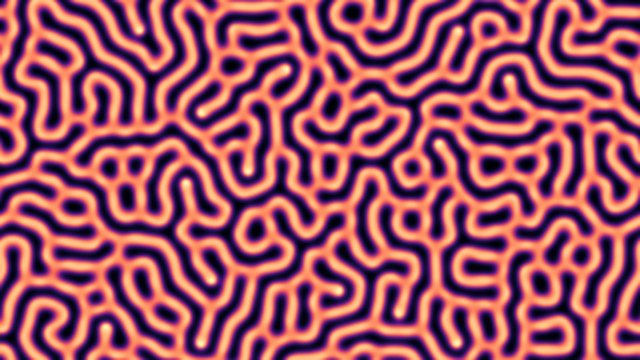
open full screen ↗Two chemicals, one that activates and one that inhibits, diffusing at different rates. That is all it takes for a flat, featureless state to break into spots, stripes, and labyrinths on its own. This is Turing’s idea made concrete with the Gray-Scott equations on a grid. Sweeping the feed and kill rates walks you across the whole Pearson diagram of patterns, and watching one grow out of random noise does not stop being a little surprising.